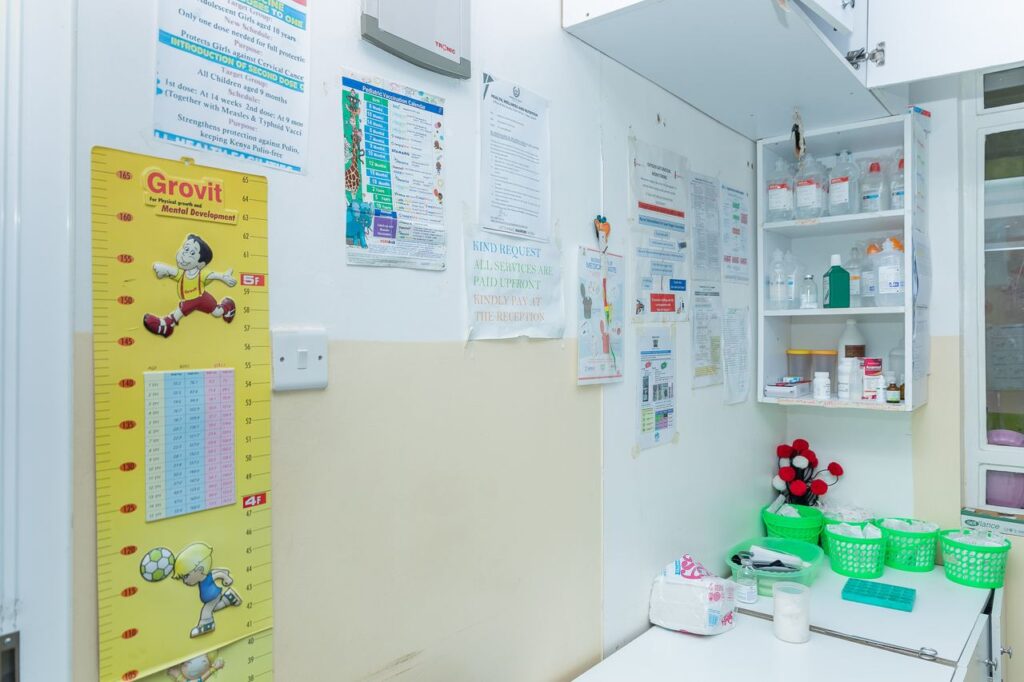
Vaccines are one of the most powerful ways to protect your child from serious diseases — and in Kenya, the KEPI (Kenya Expanded Programme on Immunization) schedule makes it easy to know what is due and when.
The first year is the busiest. At birth your baby receives BCG (against tuberculosis) and the first oral polio dose. At 6, 10 and 14 weeks come the pentavalent vaccine (protecting against five diseases including diphtheria, tetanus and whooping cough), pneumococcal vaccine, rotavirus drops and further polio doses. At 6 months, vitamin A supplementation begins, and at 9 months your child receives the measles-rubella and yellow fever vaccines, with a measles-rubella booster at 18 months.
Why the exact timing matters. Each dose is scheduled for the age when your child’s protection from earlier doses (or from mum) starts to fade. Delaying doses leaves a window where your child is vulnerable — so if you miss a visit, don’t start over and don’t panic: just come in, and we’ll catch up the schedule safely.
What about optional vaccines? Beyond the KEPI schedule, additional vaccines — like influenza, chickenpox, hepatitis A and typhoid — can offer valuable extra protection. Ask us which ones make sense for your child’s age and situation.
Common worries, honestly answered. Mild fever, fussiness or a sore spot after vaccination is normal and passes within a day or two. Serious reactions are very rare — far rarer than the diseases the vaccines prevent. If your child is unwell with a high fever on the day, we may advise a short postponement; a simple cold usually isn’t a reason to delay.
Keep your child’s clinic card safe and bring it to every visit — it’s the official record schools and clinics rely on. Our immunization clinic runs daily, and we send reminders so no dose gets missed. If you’re unsure what your child is due for, bring the card in and we’ll review it together — it takes five minutes and could prevent a lifetime of complications.